
The Personal Needs Allowance for nursing home residents is just $72.80 per month—far too little to cover basic necessities like clothing, toiletries, or a haircut. This decades-old amount undermines dignity and independence for people who have little else of their own. Ask legislators to support S.887 and H.1411 and include a PNA increase with a cost-of-living adjustment in the state budget.
- Amendment for FY 2027 Budget: 4000-0600 — Personal Needs Allowance (PNA)
- PNA Toolkit
- July 1, 2025: Hearing on the PNA
- May 2025: The Campaign to Increase the Personal Needs Allowance (PNA)
- State House Briefing on proposed legislation to increase Personal Needs Allowance (PNA) for Nursing Home Residents
- PNA Resources
- 2025-01-14 Spotlight: Medicaid Personal Needs Allowances – Overdue for Adjustment
Amendment for FY 2027 Budget: 4000-0600 — Personal Needs Allowance (PNA)
Amendment Language
In line item 4000-0600, by striking the figure and inserting in place thereof a figure sufficient to increase the personal needs allowance for residents of nursing facilities to not less than $100 per month; and
provided further, that beginning July 1, 2027, the personal needs allowance shall be adjusted annually based on the consumer price index for all urban consumers (CPI-U).
Explanation of the Amendment
This amendment increases the Personal Needs Allowance (PNA) for nursing facility residents from $72.80 per month to not less than $100 per month and permanently indexes the allowance to inflation beginning January 1, 2027.
The current PNA level of $72.80 is inadequate to meet even minimal personal expenses for residents of nursing facilities. The state supplemental payment amount has not been increased since FY2008. Over the past seventeen years, the cost of living has increased significantly due to cumulative inflation. Residents must use the PNA to purchase clothing, toiletries, shoes, personal hygiene supplies, haircuts, telephone access, over-the-counter items, modest social participation costs, and other basic personal necessities not covered by Medicaid.
The failure to adjust the PNA since FY2008 has resulted in a substantial erosion of purchasing power. When adjusted for inflation since 2008, the current $72.80 monthly allowance would need to be significantly higher simply to maintain equivalent value. This amendment does not fully compensate for nearly two decades of inflationary loss; however, increasing the allowance to $100 per month provides meaningful relief and establishes a structure to prevent further erosion going forward through automatic CPI indexing.
In 2025 alone, twelve states increased their supplemental Personal Needs Allowance rates for nursing home residents. Massachusetts was once in the top tier of states supporting nursing home residents through an adequate PNA. Today, the Commonwealth ranks approximately 24th among states. Adoption of this amendment would restore Massachusetts to the top tier of states in supporting its most vulnerable residents.
This amendment represents a modest but critical step toward correcting years of inaction and reaffirming the Commonwealth’s leadership in long-term care policy.
Fiscal Note
Estimated FY27 impact: approximately $6.5 million gross.
No federal Medicaid match is available for the state supplemental increase.
While this amendment increases direct state expenditures, the amount is modest in comparison to the overall long-term care budget and represents a targeted investment in resident dignity.
Why It Matters
The Personal Needs Allowance is the only discretionary income available to most nursing home residents. After their required contribution toward care costs, residents are left with the PNA to meet all personal needs. At $72.80 per month, residents are expected to survive on approximately $2.40 per day.
This level of support is inconsistent with the Commonwealth’s values and undermines resident dignity. Residents should not be forced to choose between basic hygiene products and telephone access to family members.
Massachusetts has historically been a leader in long-term care policy. The Commonwealth was once among the highest-ranking states in PNA support but now ranks approximately 24th. Increasing the allowance to $100 per month and indexing it to inflation moves Massachusetts back toward the top tier of states that protect their most vulnerable citizens.
Although this amendment does not fully restore the lost purchasing power since FY2008, it establishes a forward-looking mechanism that prevents future erosion and signals a renewed commitment to dignity, fairness, and responsible policy.
PNA Toolkit
August 2025 – DignityMA has added a new advocacy toolkit, and the Consumer Voice has added facts and a podcast. Scroll down to PNA Resources.
July 1, 2025: Hearing on the PNA
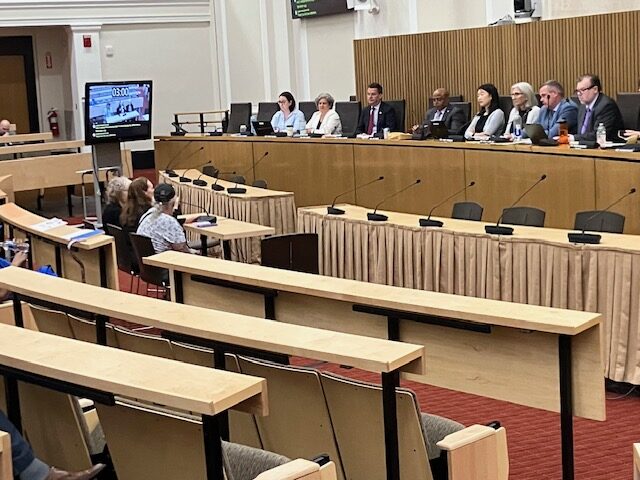
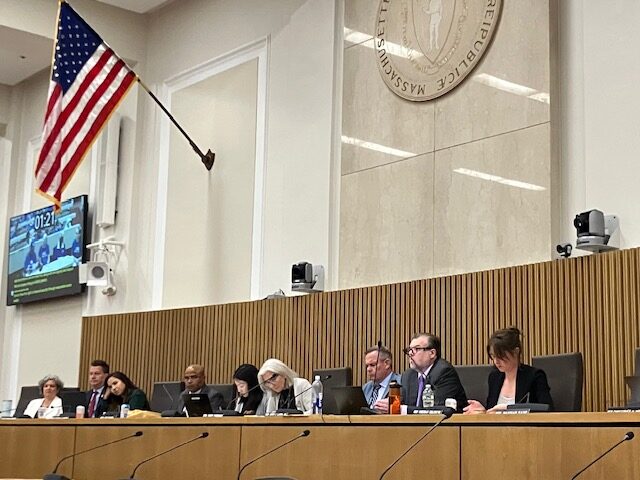
The Joint Legislative Committee on Health Care Financing held a hearing at the State House on legislation to raise the Personal Needs Allowance for nursing home and rest home residents.
Watch the Joint Committee on Health Care Financing July 1 Hearing.
Read the Dignity Alliance Report on the July 1 Hearing (pdf).
Residents and administrators from the Hale House, a Boston rest home, testified in favor of raising the Personal Needs Allowance from $72.80 per month to $113.42 per month and include annual cost of living adjustments in the future. The rate has been stuck at the lower figure for nearly 20 years.
Alice Bonner, PhD and former Massachusetts Secretary of Elder Affairs, said “It is critical that we adjust the personal needs allowance to better support individuals living in long-term care settings such as nursing homes.” She also stated “‘The PNA is usually the only money that residents on Medicaid have to pay for personal items such as clothing, shoes, toiletries, reading material such as a newspaper, electronics such as a cell phone, internet access, or occasionally going out for a special event.”
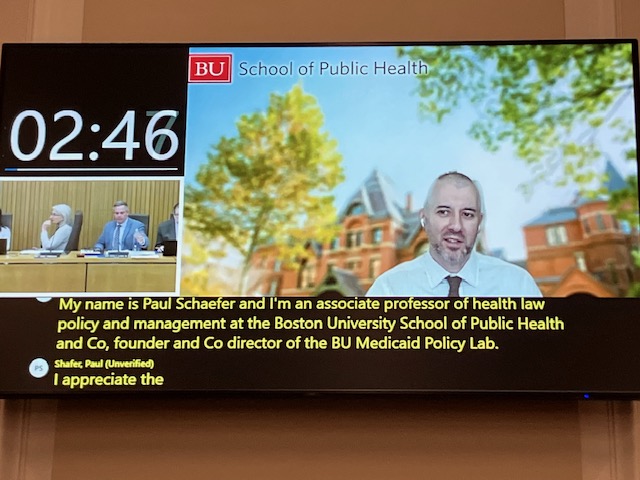
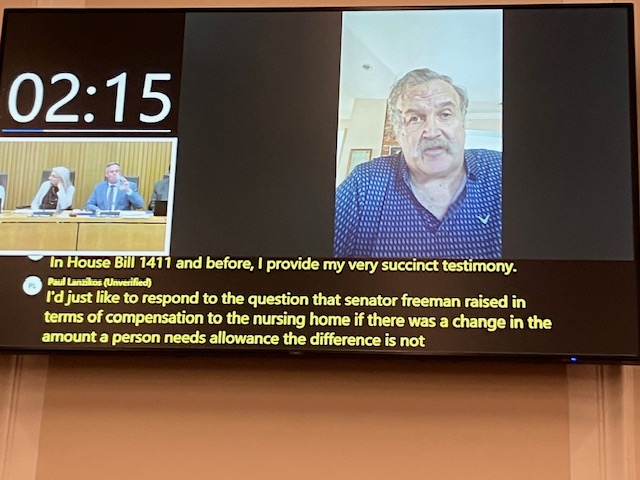
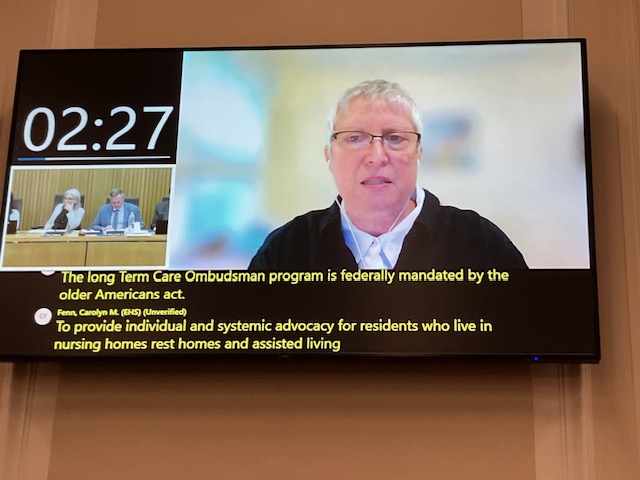
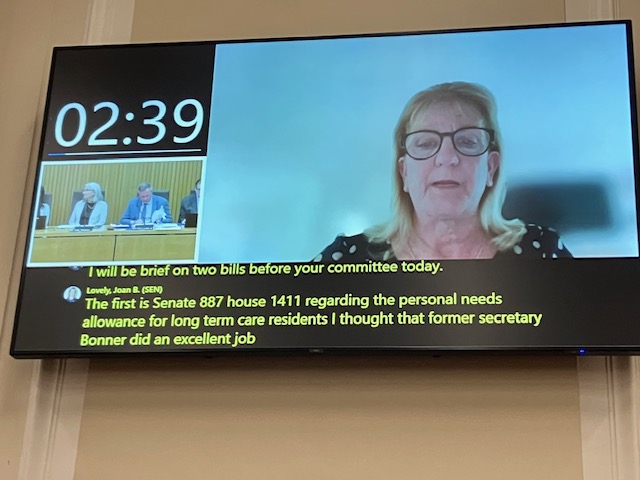
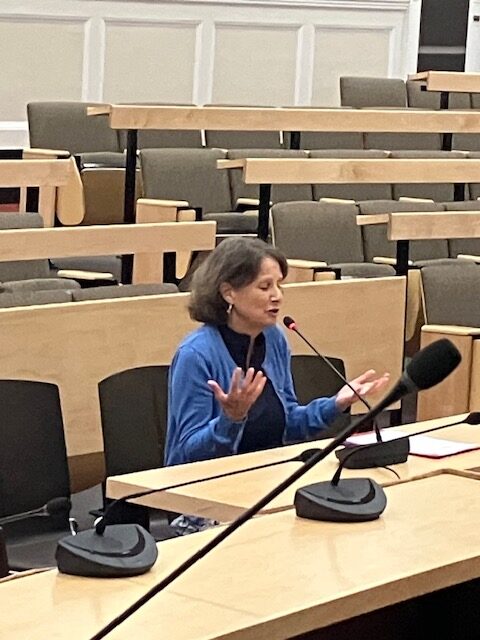
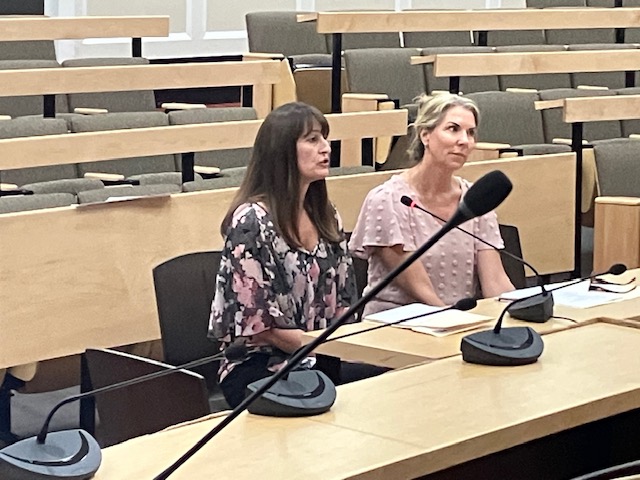
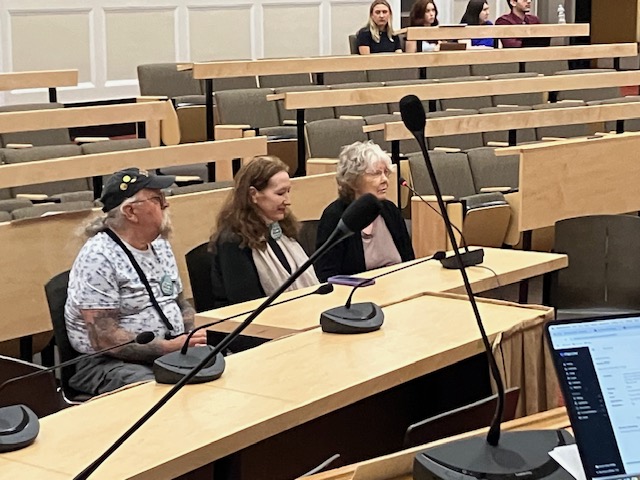
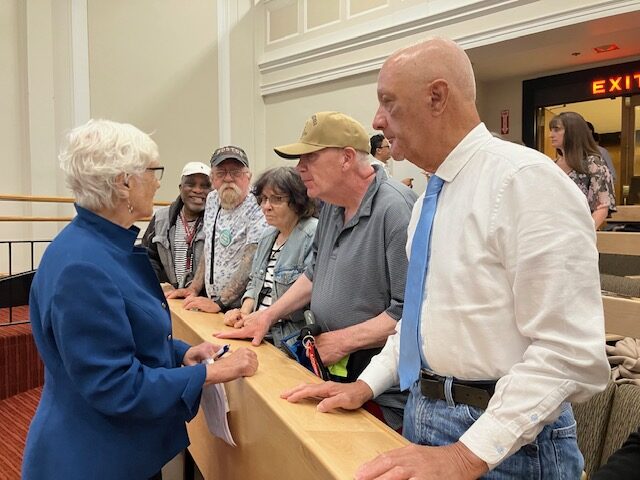
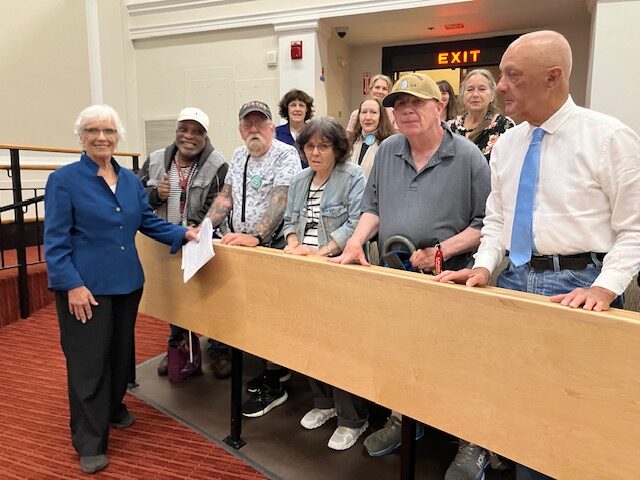
Everyone pictured below also testified in favor of raising the PNA.


May 2025: The Campaign to Increase the Personal Needs Allowance (PNA)
Download the A Raise for Mom – the Campaign to Increase the PNA (pdf).
For nearly 20 years, the Personal Needs Allowance for Nursing Home and Rest Home residents has been stuck at $72.80 per month. If inflation had been factored since the amount was last set, the allowance should now be about $113.42. Costs for everything have increased over the last two decades, but the PNA has remained unchanged. That means that folks residing in nursing homes and rest homes have been paying ever higher prices for their personal needs – items not covered within the care, room, and board required to be provided by nursing and rest homes. These residents are obligated to pay almost all their monthly Social Security and other income for their basic care leaving the PNA to cover all other life’s necessities. Amplifying this situation, Massachusetts has the highest cost of living of any state in the continental United States – meaning these vulnerable residents can afford less each and every year.
Three similar bills have been filed in the Massachusetts Legislature this year and are awaiting a public hearing with the Joint Committee on Health Care Financing, chaired by Senator Cindy Friedman and Representative John Lawn. The bills to raise the PNA are Senate Bill 887 by Senator Joan Lovely and others; Senate Bill 482 by Senators Patricia Jehlen and Mark Montigny and others; and House Bill 1411 by Representative Thomas Stanley and others. As of early May, twenty-nine legislators (11 senators, 16 representatives) have already co-sponsored one or more of these bills. Dignity Alliance Massachusetts, AARP Massachusetts, and LeadingAge Massachusetts are among the statewide organizations which have indicated they support the PNA legislation. There’s still time for other legislators to become co-sponsors.
If you are a nursing or rest home resident, family member, or caregiver and have a story about the inadequacy of the current PNA, your story can help put an important human face on why this raise is so necessary. Please submit your story online or you can email your story to Dignity Alliance MA (info@DignityAllianceMA.org) as soon as possible, noting at least your first name and town where you live so that we can include your story in the testimony submitted to the Legislature.
State House Briefing on proposed legislation to increase Personal Needs Allowance (PNA) for Nursing Home Residents
March 10, 2025. In person and virtual event. Video recording and transcript below.
Academic experts and sponsors will be sharing the importance of these bills which seek to increase the monthly amount withheld from a nursing home resident’s income to be used for personal needs not covered by the nursing home or rest home where they reside. Bills S887, S482, and H1411.
Agenda
Welcome – Paul J. Lanzikos, Dignity Alliance Coordinator, former Secretary of Elder Affairs
Statement of the Issue
- Monica S. Aswani, DrPH, Department of Health Services Administration, School of Health Professions, University of Alabama at Birmingham
- Paul R. Shafer, PhD, assistant professor in the Department of Health Law, Policy, and Management and co-director of the Boston University Medicaid Policy Lab.
Lived Experience
- Jill Gemelli, Adminstrator, Hale House, Boston
- Elizabeth Leabitt, President, Hale House Residents’ Council
- Hale House residents
Nursing Home Response
- Kathy E. Gallin, Vice President Legislative Affairs and Health Policy, Signature HealthCARE Consulting (video)
Legislative Sponsors
- Introductions by Richard T. Moore, Dignity Alliance Legislative Chair, Former Senate President Pro Tempore
- Representative Thomas Stanley, House Chair, Elder Affairs (HD401)
- Senator Joan Lovely, Assistant Senate Majority Leader (SD2385)
- Senator Patricia Jehlen, Senate Chair, Elder Affairs (SD 401)
- Senator Mark Montigny, Senate Chair, Post Audit (SD401)
PNA Briefing Video
Read the video auto-transcript (pdf)
PNA Resources
- August, 2025: Dignity Alliance MA has developed an Advocacy PNA Toolkit (pdf) with arguments for the PNA and advice on how to advocate for legislation.
- August, 2025: The National Consumer Voice for Quality Long Term Care developed materials on advocating for increased personal needs allowances in nursing homes. Many states in the U.S. have inadequate Person Needs Allowances.
- Fact Sheet: What is Personal Needs Allowance?
- PNA By State Chart
- Pursuing Quality Long-Term Care: A Consumer Education Podcast. Listen to the latest podcast titled Advocating for Increased Personal Needs Allowances in Nursing Homes. The panel includes three advocates who have worked to raise the personal needs allowance (PNA) and improve the quality of life for nursing home residents in their states.
- DignityMA PNA Fact Sheet (pdf)
- DignityMA PNA Talking Points (pdf)
- JAMA, January 3, 2025 Medicaid Personal Needs Allowances—Overdue for Adjustment
- McKnights Long Term Care News, January 27, 2025 The drive to raise the personal needs allowance — the right thing to do
- Take Action on the Personal Needs Allowance
- PNA Briefing Flyer (pdf)
- Media release on the PNA Briefing(pdf)
2025-01-14 Spotlight: Medicaid Personal Needs Allowances – Overdue for Adjustment
JAMA Health Forum
By Monica S. Aswani, DrPH; Paul R. Shafer, PhD, January 3, 2025
Editor’s Note: An increase in the Personal Needs Allowance for Massachusetts nursing home residents and the establishment of an annual cost of living adjustment (COLA) are priority legislative objectives of Dignity Alliance Massachusetts for the 2025-2026 Legislative Session.
Medicaid Personal Needs Allowances—Overdue for Adjustment
There were over 1.3 million nursing facility residents across more than 15 000 facilities in the US as of 2022,(1) and the high cost of long-term care puts financial pressure on older adults and their loved ones. Because of these high costs, Medicaid serves as the payer of last resort for most US individuals and is the primary payer for nursing home care in the US.(2) Consequently, nearly two-thirds of nursing home residents relinquish their income to Medicaid excluding a small monthly stipend known as the personal needs allowance (PNA).
As the primary payer for these residents, Medicaid covers the cost of nursing facility care, room and board, and assistance with activities of daily living. The facility is required to provide a set of basic hygiene items, such as a toothbrush and toothpaste, bath soap, and hair comb, at no charge to the resident, but the quality of and/or assistance with these items may be subpar.(3) The PNA varies by state and is intended to cover anything not provided by the nursing home, such as clothing, shoes, snacks, and cell phone bills. While many states cover ancillary therapeutic services, such as audiology, optometry, and dentistry,(4) there is wide variation in the optional benefits available. As a result, residents may also need to use their PNA to cover such services in addition to any personal items they need. Imagine if after room, board, and medical care, you only had $30 per month for personal expenses like your cell phone bill, haircut, or preferred toiletries. This is the reality for nursing home residents in Alabama and South Carolina today. Meanwhile, the average cell phone bill alone was $141 per month in 2024. (5)
The PNA was initially set to a federally mandated minimum of $25 per month with the Social Security Amendments of 1972. The Omnibus Budget Reconciliation Act of 1987 raised the minimum allowance to $30 per month, which remains in place today. States are able to set higher PNA limits up to a maximum of $200 per month. PNAs ranged from $30 to $80 in 2001, averaging $43 nationwide. (6) In 2024, PNAs ranged from $30 to $200, averaging $70 nationwide.(7) Because the limits set in law are not inflation adjusted, $30 in 1988 would need to be $80 in 2024 to have the same purchasing power, meaning individuals in states with the federal floor currently receive an allowance that is worth less than half of what residents received almost 4 decades ago.
To qualify for Medicaid, applicants must have limited income and assets, and these thresholds also vary by state and are set at different levels based on marital status. For married couples, income of the nonapplicant spouse is not counted toward eligibility determination, whereas assets of the nonapplicant spouse are counted. Under Medicaid spousal impoverishment provisions, the community spouse can retain a higher amount of income and assets than Medicaid limits without jeopardizing their spouse’s coverage as a safeguard from financial precarity.
Many states coordinate Medicaid eligibility determinations with the federal Supplemental Security Income (SSI) program. Single SSI beneficiaries are limited to $2000 in assets, and married SSI beneficiaries are limited to $3000 in assets. In most states, these asset allowances have not changed since 1989, and thus, their real value has similarly declined due to inflationary erosion. While nursing home residents can cover personal expenses from their assets, evidence suggests that two-thirds of SSI beneficiaries have less than $500 in assets. The provisions for a spouse to retain higher income and assets may help offset insufficient PNAs but only for married beneficiaries with spouses able to contribute financially. Likewise, California eliminated asset limits at the start of 2024, and a handful of other states, such as New York and Maine, have higher asset limits, which may help supplement PNAs.
Whether and how policies are indexed to inflation has significant implications for their ability to achieve their intended purpose. Increasing the federal PNA floor and indexing that floor to inflation going forward could improve the quality of life and well-being for adults receiving Medicaid who live in nursing homes. Fifteen states (30%) have not increased the PNA since 2001. Although only 2 of those states remain at the federal minimum of $30 per month, beneficiaries will still have to rely on lagged, ad hoc adjustments from other states in the future without policy reform.
There is a history of nursing facilities being cited for withholding PNA from residents, (8) which prevents these residents from being able to pay for personal essentials, such as a cell phone to stay connected with loved ones. Low monthly PNAs, even when appropriately disbursed, still compound the likelihood of poorer mental and physical health for residents. For example, if a resident cannot afford new shoes, they may be at higher risk for a fall or other injuries.
While numerous studies have investigated how state heterogeneity in Medicaid income and asset allowances may impact health outcomes, to our knowledge, none have examined variation in the PNA. The PNA is long overdue for an adjustment in many states; moreover, it warrants more study to better understand its role in the well-being and health of Medicaid beneficiaries as well as its potential to contribute to health inequities for older US adults.
In 2022, the Centers for Medicare & Medicaid Services (CMS) released its Framework for Health Equity identifying 5 priorities that will inform their efforts to advance health equity for the next decade. The second priority highlights the imperative to “assess causes of disparities within CMS programs, address inequities in policies, and operation to gaps.” (9) Despite an increasing emphasis on home- and community-based services, promoting health equity also requires that older adults be able to age with dignity while residing in a nursing home. Taken together, inadequate PNAs compromise the human rights and basic needs of older adults, force them to make tough choices about what personal needs they will have to forego, and highlight underlying ageist attitudes embedded within policy. Addressing the deficiency of PNA should be an element of fulfilling this CMS priority.
References
- Welch W, Oliveira T, Blanco M, Sommers B. Ownership of skilled nursing facilities: an analysis of newly released federal data. Department of Health & Human Services Office of Health Policy. 2022. Accessed May 22, 2024.
- Genworth Financial. Cost of care survey. Accessed May 22, 2024.
- Coleman P, Watson NM. Oral care provided by certified nursing assistants in nursing homes. J Am Geriatr Soc. 2006;54(1):138-143. doi:10.1111/j.1532-5415.2005.00565.xPubMedGoogle ScholarCrossref
- MACPAC. Medicaid’s role in providing assistance with long-term services and supports. Accessed May 22, 2024.
- JD Power. Wireless purchases through apps increase, leading to increase of value and affordability perceptions, J.D. Power Finds. Accessed October 10, 2024.
- Ortiz H. Personal needs allowances for residents long-term care facilities: a state by state analysis. The National Long-Term Care Ombudsman Resource Center. 2009. Accessed January 16, 2024.
- How much monthly income can be kept when residing in a Medicaid-funded nursing home? American Council on Aging. Accessed May 22, 2024.
- Social Security Administration. Annual report on the results of periodic representative payee site reviews and other reviews. 2014. Accessed May 22, 2024.
- McIver L. CMS framework for health equity 2022-2032. Centers for Medicare & Medicaid Services. 2023. Accessed January 16, 2024.