
Remembrance is not just about looking back; it is about carrying their light forward.
During the Covid pandemic (from January 2020 through May 2023), countless lives were lost; some cut short by the virus itself and others impacted by the isolation, fear and disruption of pandemic restrictions. Dignity Alliance Massachusetts has established a virtual memorial for those who were lost, and we invite you to add your stories of your loved ones
During the 2020-2023 pandemic, over 25,000 people died in Massachusetts of COVID-19. The coronavirus spread quickly throughout the United States; hospitals became overwhelmed with COVID patients; and there was an acute shortage of personal protective equipment. By mid-March, 2020, a state of emergency was declared in Massachusetts. Large gatherings were banned and people were encouraged to stay home; non-essential businesses closed and many employees began working from home; schools and restaurants were closed; and family and friends were not permitted to visit those in residences for older adults and people with disabilities, group homes, nursing homes and assisted living facilities. In early 2021, vaccines became available, but it was not until April-May, 2023 that the public health emergency was lifted in the United States.
The 2020-2023 pandemic was an exceedingly difficult time. People experienced great isolation; many died in health facilities without family and friends to comfort them; and many survivors did not get to attend funerals or grieve in person with family and friends. Young children were adversely impacted by the school closures and isolation; and parents struggled to manage working from home while children could not attend day-care or schools.
Submit a story. Share a photo. With no national monument or day of remembrance for the lives lost, your tribute online matters. Let the world know who was lost, what they loved and enjoyed, and how they mattered.
The memorial is free, open to all, and designed to create an enduring space so that no one is forgotten. Remembrance is healing – and every life deserves to be remembered with dignity.
Dignity Alliance and COVID
Dignity Alliance MA began in 2020, in response to overwhelmingly high death rates in nursing homes in MA (and nation wide). People with disabilities and older adults were particularly vulnerable to COVID, but infections in group facilities were exacerbated by the lack of adequate personal protective equipment for staff and the lack of sufficient staff to handle patients’ needs as family and friends were prevented from visiting.
Today, COVID is endemic. Few are still wearing masks and vaccinations are down. However, it continues to be life threatening for some, and life-changing for others.
Dignity Alliance has broadened our scope to improve life for older adults and/or those with disabilities, both in the community and in facilities.
COVID Timeline
Prepared May, 2025, data was compiled from on-line sources, including Wikipedia and Boston Globe articles.
- November – December, 2019: COVID-19 infections broke out in Wuhan City, China. On January 7, 2020, China confirmed that the Wuhan infection cluster was caused by a novel infectious coronavirus called SARS-CoV-2 which causes coronavirus disease 2019 (known as COVID-19).
- January -February, 2020: Beginning of a first wave of COVID-19 infections in the U.S.
- On January 31, 2020, the U.S. Department of Health and Human Services declared a public health emergency.
- February 29, 2020: Washington state reported that a man in his 50s with underlying health conditions was the first COVID death in the U.S. Also of concern was a report that in a Washington state nursing home, a resident and a health worker tested positive for COVID and many other residents and staff had COVID symptoms. By this time, the United States had more than 60 reported COVID cases.
- March, 2020:
- By mid-March, 2020, the United States had the highest number of known COVID cases of any country. There were over 100,000 diagnosed COVID cases in the U.S. by March 27th.
- March 10, 2020: Massachusetts Governor Charlie Baker declared a state of emergency in Massachusetts because of COVID-19.
- March 11th: The World Health Organization (WHO) declared COVID-19 a pandemic.
- March 13th: Governor Baker banned gatherings of more than 250 people in certain locations, and U.S. President Donald J. Trump declared a national emergency.
- March 14th: The U.S. Centers for Medicare and Medicaid Services (CMS) directed that all congregate housing communities (such as nursing homes) be closed to visits by family or others. All communal dining and group activities were halted. In March, visits to patients in Massachusetts hospitals were also restricted.
- March 15th: Governor Baker ordered all public and private schools to close. Dine-in eating in restaurants was banned and there could be gatherings of no more than 25 people.
- March 23rd: Governor Baker announced a stay-at-home advisory with the result that nonessential businesses were closed and many employees began working from home.
- April, 2020:
- By mid-April, 2020, Massachusetts had 25,475 cases of COVID-19 and was the state with the third-most cases in the U.S. Also by mid-April, the Massachusetts COVID death toll reached 1,000. Many of those who died had lived in long-term care facilities such as nursing homes.
- The U.S. economy contracted by 4.8% between January and March, 2020. Unemployment rose to 14.7% in April and then increased to 17.4% in June. As of June, the U.S. economy was over 10% smaller than it had been in December, 2019.
- May, 2020:
- The U.S. government led an initiative to accelerate development, manufacturing and distribution of COVID-19 vaccines, therapeutics and diagnostics. Called Operation Warp Speed, the public-private partnership ran from May 15, 2020 through February 21, 2021.
- With declining numbers of people hospitalized with COVID, Governor Baker announced on May 11, 2020 a four-phase plan to reopen Massachusetts businesses. Phase one permitted manufacturing and construction sites to open, followed by offices and “limited personal services.” On May 26th, Governor Baker announced that the surge of COVID cases was over in Massachusetts.
- June, 2020: Beginning of a second wave of COVID-19 infections in the U.S.
- On June 3, 2020, after two and a half months, Massachusetts health authorities permitted out-door visits by family and friends to residents of nursing home and other group homes, but with restrictions.
- On June 6th, Governor Baker announced phase two of the Massachusetts reopening plan, allowing childcare, day camps, lodging, retail stores, outdoor restaurant seating and children’s sports programs to reopen but with strict precautions.
- July – August, 2020:
- On July 2, 2020, Governor Baker initiated the first portion of phase three of the Massachusetts reopening plan, allowing gyms, casinos, museums and other businesses to reopen with safety precautions. Phase three also eased somewhat visitation restrictions in congregate care facilities.
- At the end of July, 2020, there was an increase in COVID-19 cases in Massachusetts which Governor Baker attributed to large gatherings that had violated state COVID guidelines.
- In August, 2020, Governor Baker delayed the second portion of phase three of the Massachusetts reopening plan.
- Schools had been closed since March, 2020, and Massachusetts schools had to decide how to commence teaching in the fall. Many districts ended up adopting hybrid plans which included remote (on-line) learning and limited in-school teaching.
- September, 2020:
- In Massachusetts, long-term care facilities were hit especially hard by the coronavirus. By the end of September, 2020, nearly 25,000 Massachusetts residents and healthcare workers in these facilities had been infected, and more than 6,000 coronavirus deaths had occurred there.
- On September 25, 2020, Massachusetts health authorities permitted indoor visits for residents of Massachusetts nursing homes and other group facilities, subject to certain restrictions.
- On September 29th, Governor Baker initiated part two of phase three of the reopening plan, allowing certain indoor and outdoor venues to open at 50% capacity.
- October – early December, 2020: Beginning of a third surge of COVID-19 cases in the U.S.
- In late October, 2020, there was a sharp increase in COVID cases in Massachusetts.
- On November 2, 2020, Governor Baker reinstated stricter rules, including face mask requirements and a stay-at-home advisory for the hours between 10 p.m. and 5 a.m.
- In anticipation of the November 3rd national election, some states (including Massachusetts) expanded mail-in voting options and offered free drop-off locations for ballots.
- On November 3rd, Joseph R. Biden, Jr. was elected President, beating out Donald J. Trump.
- By November 9th, the total number of COVID-19 cases in the U.S. surpassed 10 million and hospitals were still being overwhelmed with record numbers of COVID patients.
- On December 8th, Governor Baker announced that all cities and towns were required to roll back to part one of phase three of the state’s reopening plan.
- Mid-December, 2020 – April, 2021:
- Prior to COVID-19, a vaccine for an infectious disease had never been produced in less than several years, and no vaccine existed to prevent coronavirus infection in humans. Within less than a year after COVID-19 was declared a pandemic, vaccines received emergency approvals and vaccination campaigns were initiated. On December 10, 2020, the U.S. Food and Drug Administration (FDA) granted emergency use authorization to the Pfizer-BioNTech vaccine, and later approved Moderna and Janssen (Johnson & Johnson) vaccines.
- On December 11, 2020, the U.S. FDA approved the first over-the-counter COVID-19 test. Previously tests were done at medical offices or authorized drive-through centers.
- The first doses of a COVID-19 vaccine arrived at Massachusetts hospitals on December 14th. Health care workers were the first to get vaccinated.
- On February 1, 2021, Massachusetts residents who were 75 years of age and older became eligible for the COVID vaccine.
- Teachers, tutors and day-care providers became eligible in mid-March for the COVID vaccine.
- A full year after the March 14, 2020 closing of nursing homes and other congregate care facilities to all visitors, on March 16, 2021 Massachusetts health authorities allowed visitors to meet residents in their rooms without social distancing as long as both the visitor and resident were fully vaccinated, but each still had to wear a mask. Massachusetts health authorities also permitted resumption of group activities in congregate care facilities for fully vaccinated residents (such as card games, dining and watching movies) but with restrictions.
- On April 19th, COVID-19 vaccinations became available to everyone over the age of 12. Later, COVID vaccinations were approved for those between the ages of 6 months and 12 years.
- June 15, 2021: Governor Baker ended the COVID state of emergency in Massachusetts. New guidelines were issued on how to keep safe since the pandemic had not ended.
- July, 2021: A new mutation of the COVID virus (“Delta”) caused an increase in COVID cases in Massachusetts.
- September, 2021: Booster shots of COVID-19 vaccine (reformulated to address new variants of the virus) became available. Most of the first COVID-19 vaccines were two-dose vaccines. It was found, however, that immunity from COVID vaccine wanes over time, and so booster doses of vaccine began in late 2021 to maintain protection against COVID-19.
- November, 2021: In Massachusetts, there was a surge of cases from the Omicron variant of the coronavirus. Some companies delayed having employees return to offices.
- May 16, 2022: COVID-19 deaths in the U.S. reached 1 million.
- December, 2022: The U.S. FDA cleared Pfizer’s COVID pill, Paxlovid, for use in high-risk patients who are 12 or older. This was the first effective antiviral treatment for the disease.
- April 10, 2023: President Biden signed a resolution terminating the national emergency.
- May 11, 2023: Massachusetts Governor Maura Healey announced the end of the COVID-19 public health emergency in Massachusetts. The national public health emergency ended at the same time.
- May 29, 2023: All COVID restrictions in Massachusetts were lifted, allowing restaurants and other businesses to fully re-open.
- April 13, 2024: Because the timely reporting of COVID data had ended by spring, 2024, Coronavirus Tracker and other available data sites no longer report updated information on COVID cases. The last available COVID-19 statistics were reported as of April 13, 2024 as follows:
- National COVID numbers as of April, 2024:
- Coronavirus cases: 11,820,082 out of a population of 340,100,000 (3.48% of population)
- Deaths due to coronavirus: 1,219,487 (00.36% of population – 1/3 of 1%)
- Massachusetts COVID numbers as of April, 2024:
- Coronavirus cases: 2,367,542 out of a population of 6,892,503 (34% of population)
- Deaths due to coronavirus: 25,586 (00.37% of population – 1/3 of 1%)
- Massachusetts was no. 10 in total deaths (other states, such as Florida, New York, Ohio, Pennsylvania, Michigan, New Jersey, Georgia, Tennessee and Arizona, had higher death rates)
- National COVID numbers as of April, 2024:
- May, 2025: COVID-19 continues to cause illness and deaths. In the week from March 30 to April 5, 2025, there were 666 new confirmed coronavirus cases in Massachusetts and 2 deaths from the disease. 0.8% of all hospitalizations in Massachusetts were related to COVID-19, meaning that 103 patients were hospitalized with COVID-19.
Further Information and Resources
- Open Doors, guided by the Reality Poets, is a thriving creative community of nursing home residents, allies, and advocates
- Nursing Home Lives Matter Vigil. March 13, 2026 was the 6th annual, virtual vigil.
- Wheeling and Healing2 is a book of poetry with messages of resilience and hope and of empowerment by nursing home residents, and others. 164 pages, $25.00.
- MA at a Crossroads: DignityMA’s Vision for Long-Term Care – October 2025
- Library of Congress
- Memorials
- COVID-19 Wall of Memories – over 23,700 people honored and remembered
- Marked by COVID – seeking to create a national memorial and national COVID memorial day
- Remembering Connecticut residents who died after coronavirus
- March 1, 2025, Boston Globe: More than 1 million Americans have died of COVID-19. Why is there no national day to remember them?
- July 7, 2022, Mourning and Memorializing in the COVID-19 Era from the National Communications Association
- Impact and Lessons of COVID on Long-Term Care
- May 20, 2025, The Historic Impact of COVID-19 on Nursing Homes and the Failed Response, webinar, Ken Levine, presenter
- American Eldercide. How It Happened, How to Prevent It by Margaret Morganroth Gullette, 2024
- Do It For Them | Covid-19 Impact
- 2024, Lessons Learned During the Pandemic Can Help Improve Care in Nursing Homes
- Nursing homes during the COVID-19 pandemic: a scoping review of challenges and responses – PMC
- Long-Term Care Facilities and Nursing Homes during the First Wave of the COVID-19 Pandemic: A Scoping Review of the Perspectives of Professionals, Families and Residents – PubMed
Submission of Remembrance
Dignity Alliance MA welcomes any additional remembrance submissions: Submit your remembrance.
Each description of a deceased is limited to 175 words. This is not intended as an obituary with lists of family or friends. Instead, try to describe something of the deceased’s essence and the values they lived by. Also include how the deceased came to die (e.g. were they in a nursing home, hospital or an essential worker of some sort). One digitized photo may be submitted. We will upload additional submissions as soon as we can. For any questions, contact dwcoogan@gmail.com.

In Memoriam
Remembering Peter W. Coogan
February 21, 1944 – April 9, 2020
Peter Coogan was a modern-day Renaissance man with diverse interests and great ability. For 37 years, Peter practiced law at Foley Hoag, a large Boston law firm, where he chaired the firm’s business department and was a managing partner.
Peter loved his wife and two children, and the family spent virtually every weekend and vacation at their Vermont vacation home where Peter mowed the fields and maintained the woods and dirt roads with his much-beloved tractors. Peter was equally passionate about classical music although when asked about his musical talent, he would say that he excelled only in playing the stereo. Nonetheless, Peter spent many happy hours banging on pots and a xylophone with his infant grandniece and grandson.
At the end of his life, Peter was debilitated and in a nursing home. His wife was with him every day until nursing homes were closed to visitors because of the pandemic. Shortly after the closure, Peter contracted COVID and he died alone without his family.
Submitted by Debbie Coogan


Remembering Rabbi Cantor Theodore Schneider, 91 years old, who died in August 2020.
A spiritual leader for many decades in Greater Boston, his humble and soft-spoken ways contrasted with his dramatic tenor voice that left congregants in awe in temples and synagogues. Because he was a compassionate listener, his pastoral counsel was sought by many on the challenges of life, and his name will always be synonymous with outreach to the most vulnerable in the community and the help he offered to anyone in need. He was also an artist, master cook, loved animals, and enjoyed walks with friends.
A lover of opera and classical music, he played the piano, violin, viola, and cello. This includes the piano playing he did as a resident in facilities at the end of his life. He didn’t die of covid, but declined with his own health conditions when his essential caregivers were denied access to help him manage during the early days of the pandemic.
Submitted by Sandy Novack
Remembering Lois Hamilton
Lois Hamilton was a loving mother who lived a Christian life as a caretaker of her family. She was diagnosed with Lewy Body Dementia and came to live near one of her daughters in a Massachusetts nursing home. She was a beautiful lady with a kind heart and a smile that lit up the room, even with advanced stage dementia she showed love and compassion to all that surrounded her. The nurses often said that wherever she was in her mind, it was a happy place. Dementia confined her to a wheelchair, leaving her codependent on the nursing home staff.
Unfortunately, due to the lack of ability to protect our nursing home residents from this horrible pandemic, hospital patients were sent back to the facilities to be cared for by the same staff caring for the residents. She was tested by the National Guard after developing a runny nose and found to be infected with Covid, they moved her into seclusion into a back hallway where she then died within a few days at the age of 82.
The nursing home was closed to families early on with what they believed was the flu, and we were able to FaceTime once with her prior to her diagnosis. It was 4 weeks since I had seen my mother. I wish I had known that the hug I received that day would be the last time I would be able to see her beautiful face. There were so many restrictions put on nursing homes and the funeral home had even more restrictions and my siblings were not able to fly to be here to grieve the loss of our mother.
Her belongings were bagged up and put outside the main door, we couldn’t even go into the facility to gather them and found many missing personal items were missing. There was no closure, no comfort, no answers to so many questions surrounding this pandemic. My mother died alone, in a nursing home, in pain, begging them not to touch her because it hurt. I want to believe the staff reminded her that she was loved and she will always be remembered.
We laid her to rest in a Massachusetts Veterans Memorial Cemetery one year after her death where she receives honorable respect for her role as a VFW Ladies Auxiliary member and the wife of a Korean War Veteran. May we all find love and peace in the memories of our loved ones.
Submitted by Debbie Stolfi
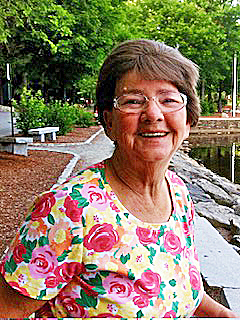
Remembering Ricky Yeats
Richard (Ricky) Yeats died April 20, 2020 at the age of 50.
Ricky died of Covid 19 in the nursing home where he had lived for 3 years. Born with Spina Bifida, Ricky always strived to be independent, productive, and helpful. As an adult he lived on his own, held a competitive job, and participated in wheelchair racing in Special Olympics (SO) as well as serving as statistician for SO Softball. Against his family’s wishes, he eloped with a wonderful woman he met online and they lived together happily for 10 years in CA until her untimely death. He had grabbed his chance at life and succeeded! He then returned to MA and lived in the nursing home where he was mayor – visiting other residents, organizing activities, and making the most of his situation. Covid was too much for his compromised lungs and he died very suddenly, without anyone being able to say goodbye or celebrate his life. So sad for his friends left behind!
Submitted by Taffy Nothnagle